When a doctor suggests “care at home” or an aging parent starts struggling with daily routines, families often find themselves navigating an alphabet soup of healthcare terms. Two of the most common terms you will hear are home health care and non-medical home care (often called personal care or supportive services).
While they sound nearly identical, they serve very different purposes. Confusing the two is common, but knowing the distinction helps you secure the exact type of support your loved one needs—without unnecessary delays or unexpected out-of-pocket costs.
Here is a clear, straightforward breakdown of how both services work, how they are paid for, and how they often work hand-in-hand.
What Is Home Health Care? (Clinical & Medical Support)
Home health care is skilled, clinical medical care prescribed by a physician to treat an illness, injury, or medical condition. Think of it as bringing short-term clinic or hospital care into the living room.
Key Characteristics:
- Doctor’s Order Required: A physician must formally evaluate the patient and write a prescription/plan of care.
- Clinical Providers: Services are delivered by licensed healthcare professionals, such as Registered Nurses (RNs), Physical Therapists (PTs), Occupational Therapists (OTs), and Speech-Language Pathologists.
- Goal-Oriented & Time-Limited: The care is designed to help a patient recover, regain function, or stabilize after a surgery, stroke, or hospitalization. Once the specific health goals are met, services conclude.
- Typical Services Provided:
- Wound care and surgical dressing changes
- Intravenous (IV) therapy or injections
- Physical therapy following a joint replacement or fall
- Monitoring unstable health conditions or chronic disease flare-ups
What Is Non-Medical Home Care? (Daily Living & Quality of Life)
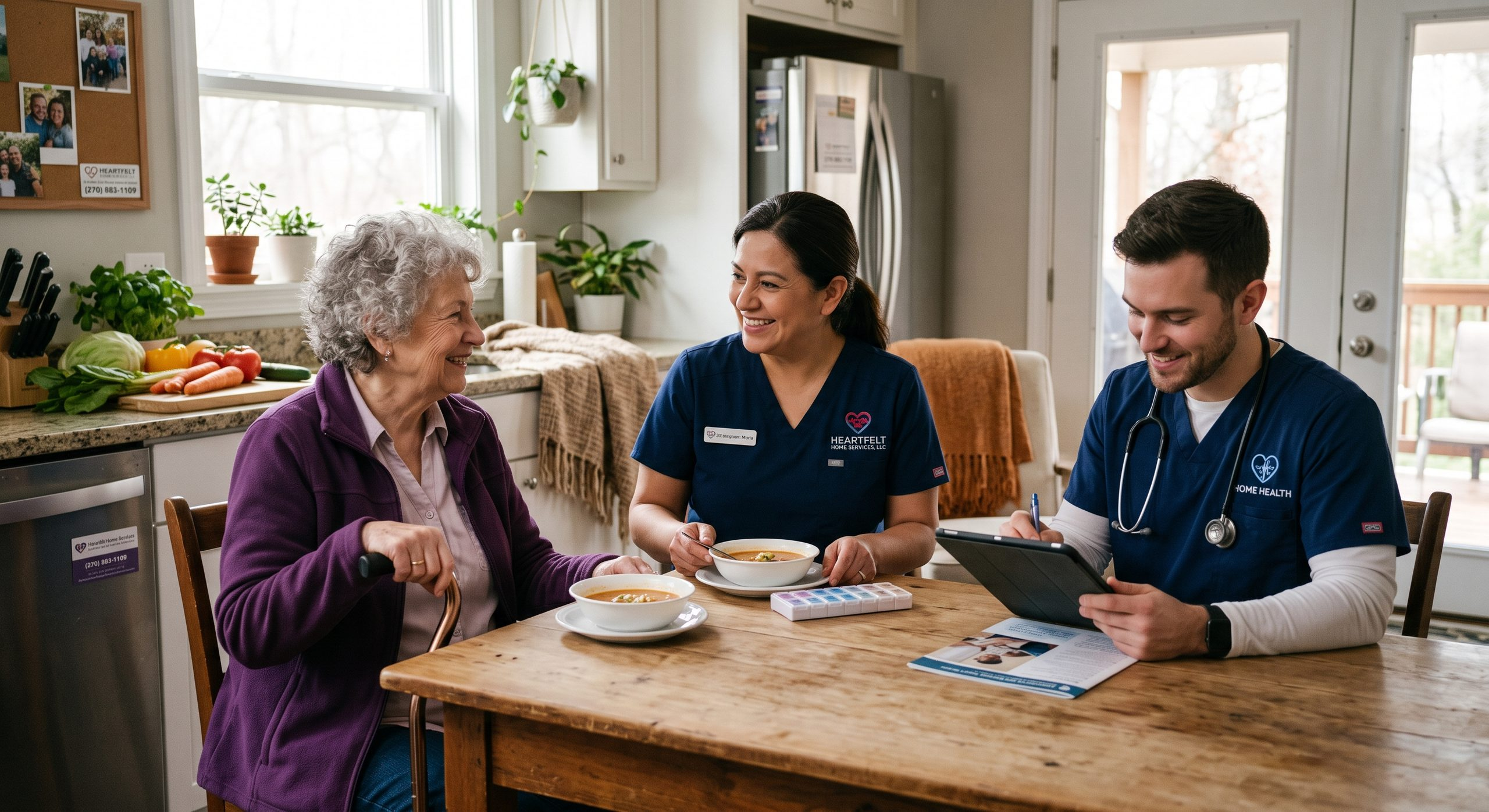
Non-Medical Home Care focuses on daily living support, personal care, and safety oversight. Instead of treating an acute illness, professional non-medical caregivers help seniors manage the essential physical and household routines required to remain living safely and independently at home.
Key Characteristics:
- No Doctor’s Prescription Needed: Families can arrange and customize support directly with an agency at any time, based entirely on their own schedule and needs.
- Compassionate Caregivers: Services are performed by trained, vetted personal care aides and companion caregivers.
- Ongoing & Flexible Support: Care can range from a few hours a week up to around-the-clock coverage, tailored to adapt as a senior’s routine changes over months or years.
- Typical Services Provided:
- Personal Care: Dignified assistance with bathing, dressing, grooming, and toileting.
- Mobility & Transfers: Walking support, steadying transfers, and fall prevention.
- Nutrition & Meals: Planning and preparing wholesome, home-cooked meals tailored to dietary preferences.
- Medication Reminders: Keeping daily routines organized and ensuring doses are taken on time.
- Homemaking: Light housekeeping, dishwashing, linen changes, and laundry.
- Transportation & Outings: Reliable rides to physician appointments, hair salons, religious services, and grocery stores.
- Companionship & Respite: Meaningful social engagement for seniors and peace of mind for family caregivers needing time to rest and recharge.
Side-by-Side Comparison
| Feature | Home Health Care | Non-Medical Home Care |
| Primary Focus | Medical recovery, rehabilitation, and skilled nursing | Daily living assistance, personal care, and companionship |
| Prescription Needed? | Yes (physician order required) | No (arranged directly by the family) |
| Who Delivers It? | Licensed nurses and physical/occupational therapists | Trained, screened personal care aides and companions |
| Duration | Short-term (typically 30–60 days per episode) | Flexible and ongoing (long-term support) |
| Primary Payment | Medicare, Medicaid, and private health insurance | Private pay, Long-Term Care Insurance, VA, Medicaid Vouchers and more. |
| Visit Length | Brief visits (often 30–60 minutes per appointment) | Blocks of time (several hours per shift, up to 24/7) |
Can You Use Both at the Same Time?
Yes—and in fact, they frequently complement each other.
For example, if a senior undergoes knee or hip surgery, a Home Health physical therapist may visit two mornings a week for 45 minutes to guide rehabilitation exercises.
However, that therapist will not stay to help your parent safely shower, cook lunch, fold the laundry, or remind them to take their evening pain medication. That is where a Non-Medical In-Home Caregiver steps in, providing the steady, daily support that prevents re-hospitalization and ensures the home environment remains safe, clean, and comfortable.
Which Service Does Your Loved One Need?
Ask yourself these three questions:
- Are their primary struggles clinical? (e.g., surgical wound care, post-stroke physical therapy, IV antibiotics)—-Start with a physician referral for Home Health.
- Are their primary struggles routine tasks of daily living? (e.g., getting into the shower safely, making balanced meals, forgetting pills, feeling lonely, falling behind on household chores)—-Reach out directly for Non-Medical In-Home Care.
- Are family caregivers feeling overwhelmed?—- Non-medical Respite Care is designed specifically to give family members a much-needed break while ensuring their loved one is in attentive, capable hands.
We’re Here to Keep Home Feeling Like Home
Every senior’s routine is unique, and getting the right level of support should never feel complicated.
At Heartfelt Home Services, our mission is to deliver dependable, non-medical care backed by genuine compassion. Whether your family needs an extra pair of hands for morning routines, reliable transportation to local appointments, wholesome meal prep, or dependable respite, our dedicated team is ready to help your loved ones thrive right where they belong.
Have questions about setting up care for someone you love?
Contact the Heartfelt Home Services team today at (270) 883-1109 to schedule a personalized, in-home consultation.